 Easten Mediatech
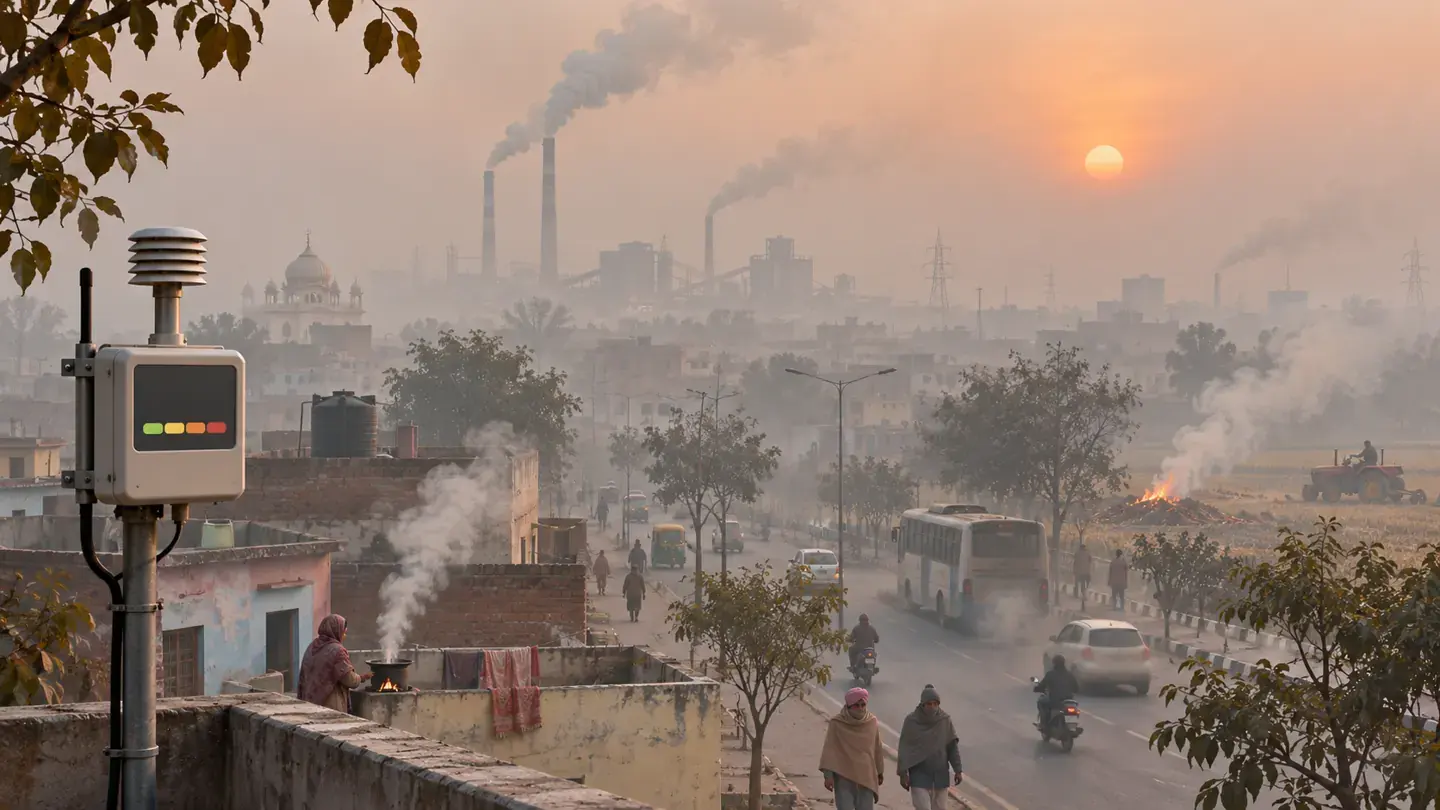
What the reported reading shows
The Tribune reported an AQI of 445 for Mandi Gobindgarh on 8 November.
Under India's national AQI scale, readings from 401 to 500 fall in the severe category.
A single city's reading is a time-specific signal, not a measure for every neighbourhood in Punjab.
For a current local reading, residents should check the official CPCB dashboard.
Why one cause is not enough
Fireworks, farm fires, traffic, industrial activity, construction dust and weather can all affect the air.
The relative contribution of each source changes by place and hour.
The news report links the post-Diwali deterioration to several sources, not one proven culprit.
Effective public action needs measurements, enforcement and source-specific evidence.
How to use the AQI responsibly
CPCB's category tells readers how polluted the measured air is and why exposure matters.
Check the station, timestamp and trend before comparing one city with another.
Follow official local health advisories, especially for children and people with existing conditions.
An AQI screenshot without its date or location can mislead even when the number itself is genuine.
The public-interest question
Residents need timely readings and clear information on actions being taken across emission sources.
Officials should report both short-term enforcement and longer-term pollution controls.
The test of progress is sustained, verifiable improvement, not a single better morning.
Sources
- The Tribune: Punjab cities face post-Diwali haze2026-11-09
- CPCB: About the National Air Quality IndexDate not stated
- CPCB: All-India AQI dashboardLive dashboard